Day 28 · Senses: Feeling — A seat in the shelter, and a safe place to use it?
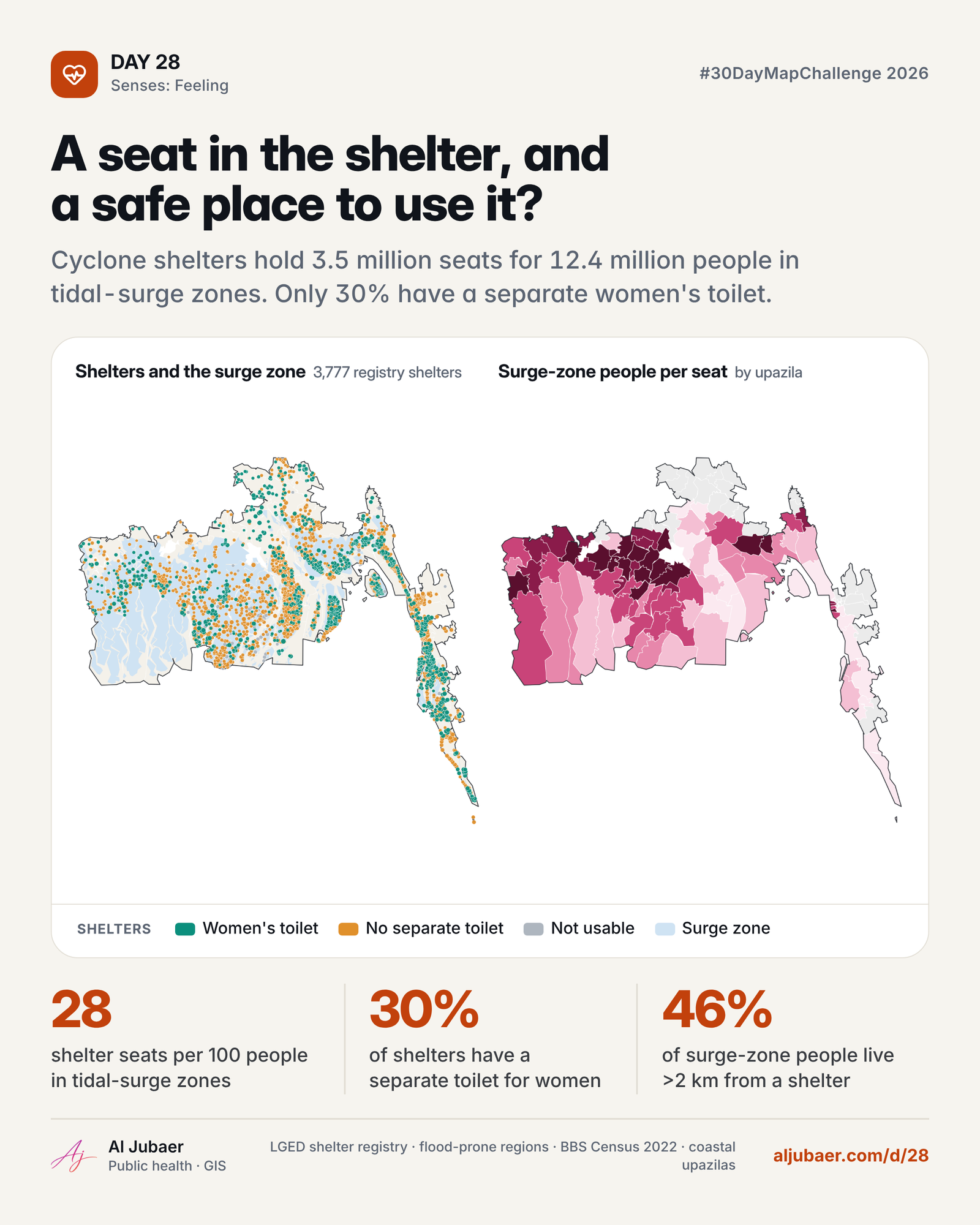
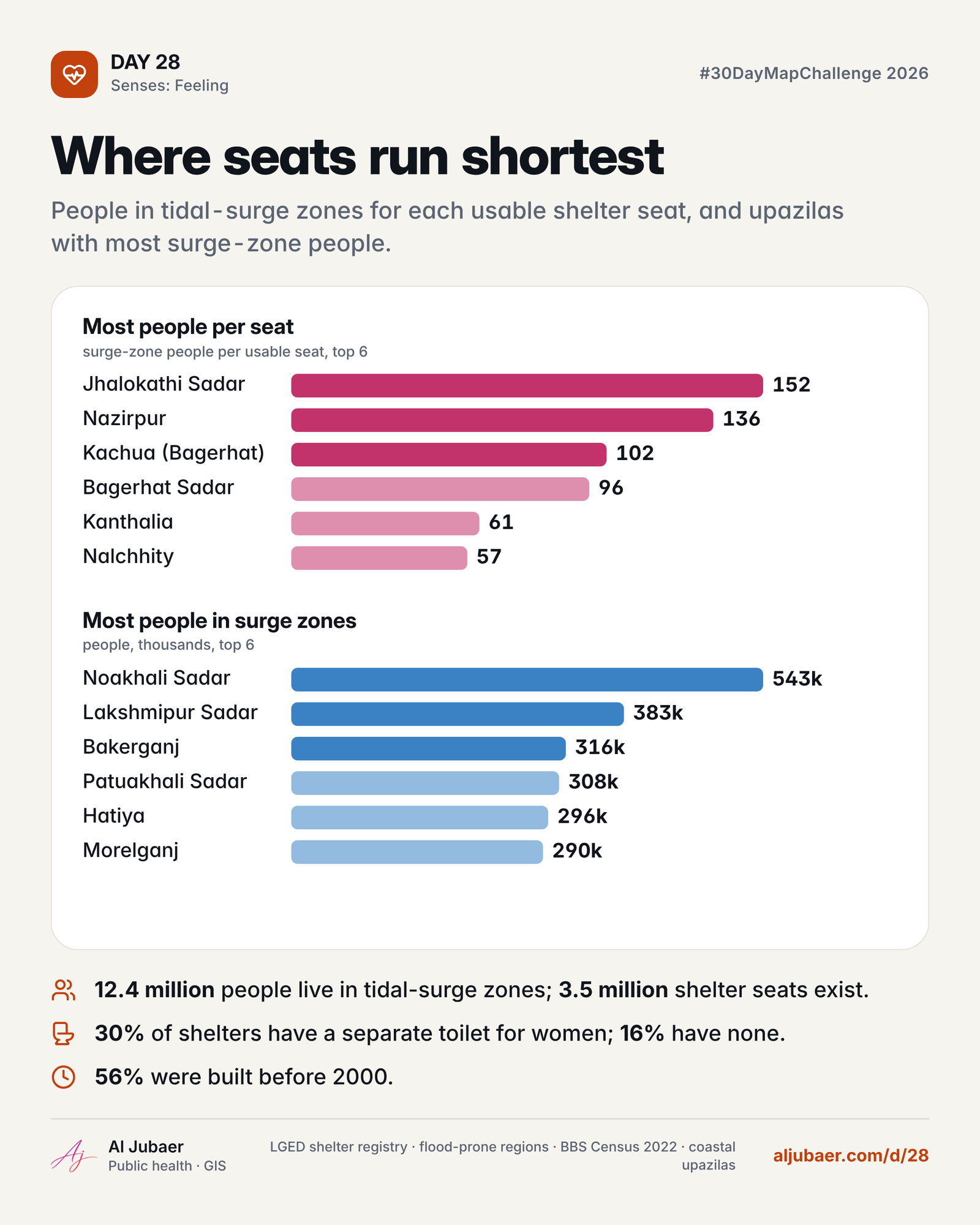
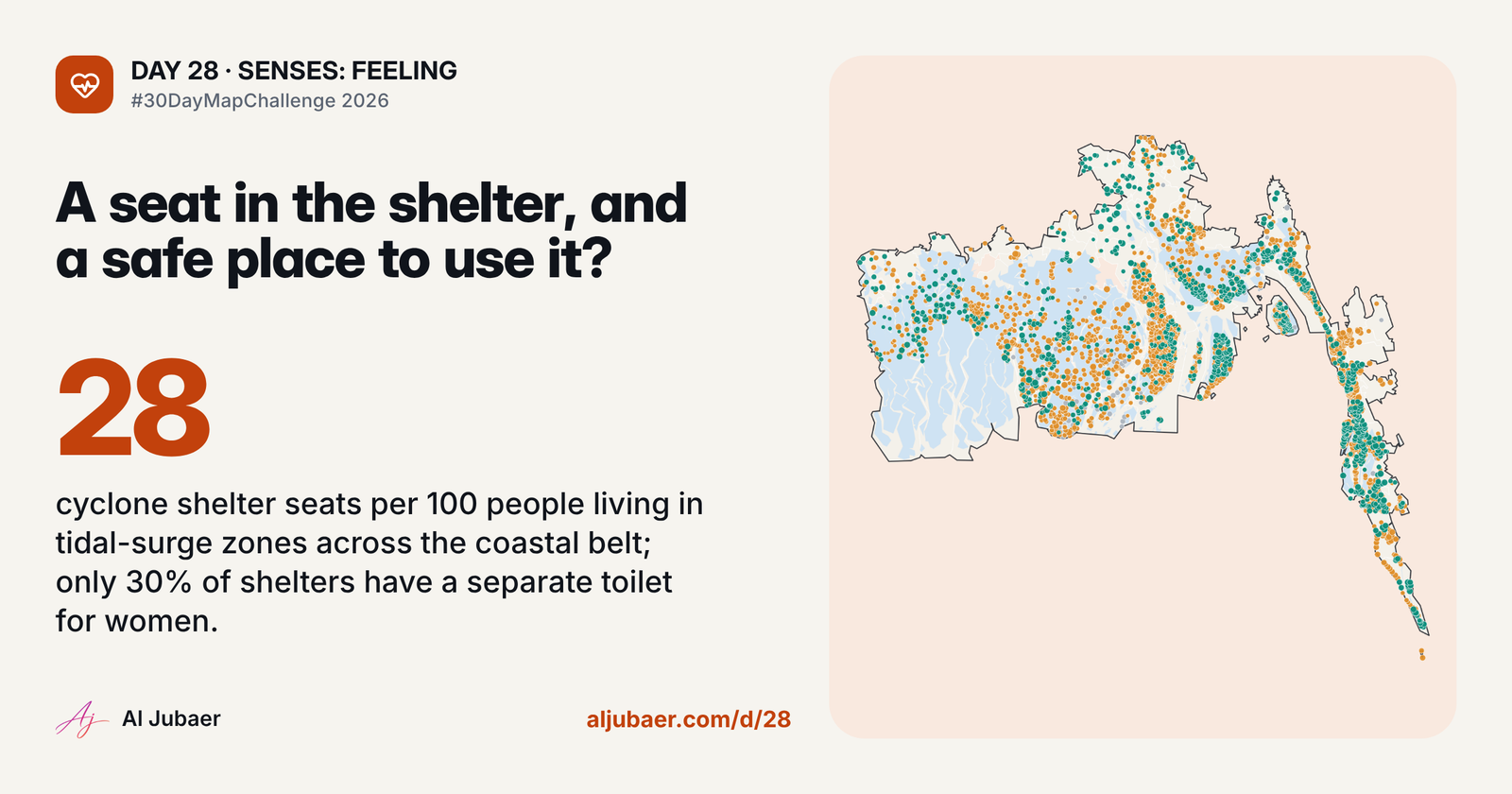
Across 122 coastal upazilas, 12.4 million people live in tidal-surge zones (modelled). The 3,515 usable registry shelters offer 3.53 million seats, about 28 per 100 people, or 3.5 people for every seat even if only surge-zone residents used them. 46% live more than 2 km from a shelter. Only 30% of shelters have a separate toilet for women, and 262 are rated not usable.

Write-up
The question
Do people living in tidal-surge zones have a seat in a cyclone shelter within reach, and do the shelters feel safe for women and girls?
Data
LGED cyclone shelter registry, flood-prone regions (tidal surge), BBS Census 2022. Surge population modelled; registry incomplete.
Methods
- Shelters: LGED cyclone shelter registry (capacity, toilets, year, condition); 'not usable' removed from seats.
- People: BBS upazila totals spread over 500 m cells weighted by mobile-tower density.
- Exposure: cells inside flood-prone regions classed as tidal-surge flooding (categories 7 and 8).
- Assignment: each exposed cell to the nearest usable shelter (cKDTree); load = assigned people / capacity.
- Quality: separate-toilet flag, toilet count, year built, structure type.
Findings
122 coastal upazilas, 33.3 million people; 12.40 million (37%) in tidal-surge zones (modelled).
3,777 registry shelters: 3,515 usable, 262 rated not usable; 3.53 million seats.
28 seats per 100 surge-zone people; 3.5 people per seat; 86% live in catchments with more than 3 people per seat.
74% live more than 1 km and 46% more than 2 km from a usable shelter.
Only 30% of shelters have a separate women's toilet, 16% have no toilet; 56% were built before 2000; most use is as a school (84%).
Comments & reviews
What you write appears here once it has been approved.
More from the Open Lab
 Web map & dashboard
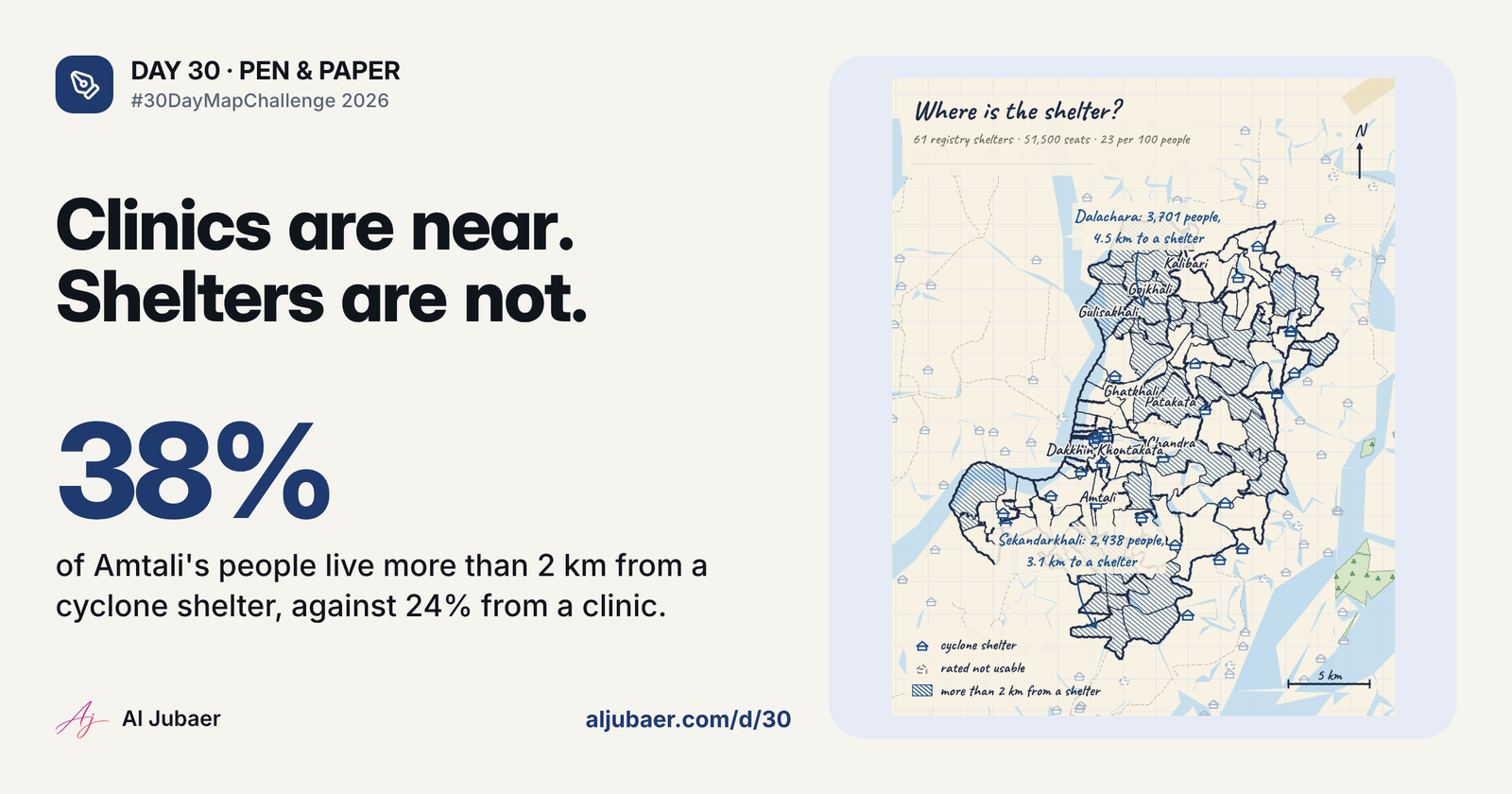
Day 30 · Pen & paper — Clinics are near. Shelters are not.
 Web map & dashboard
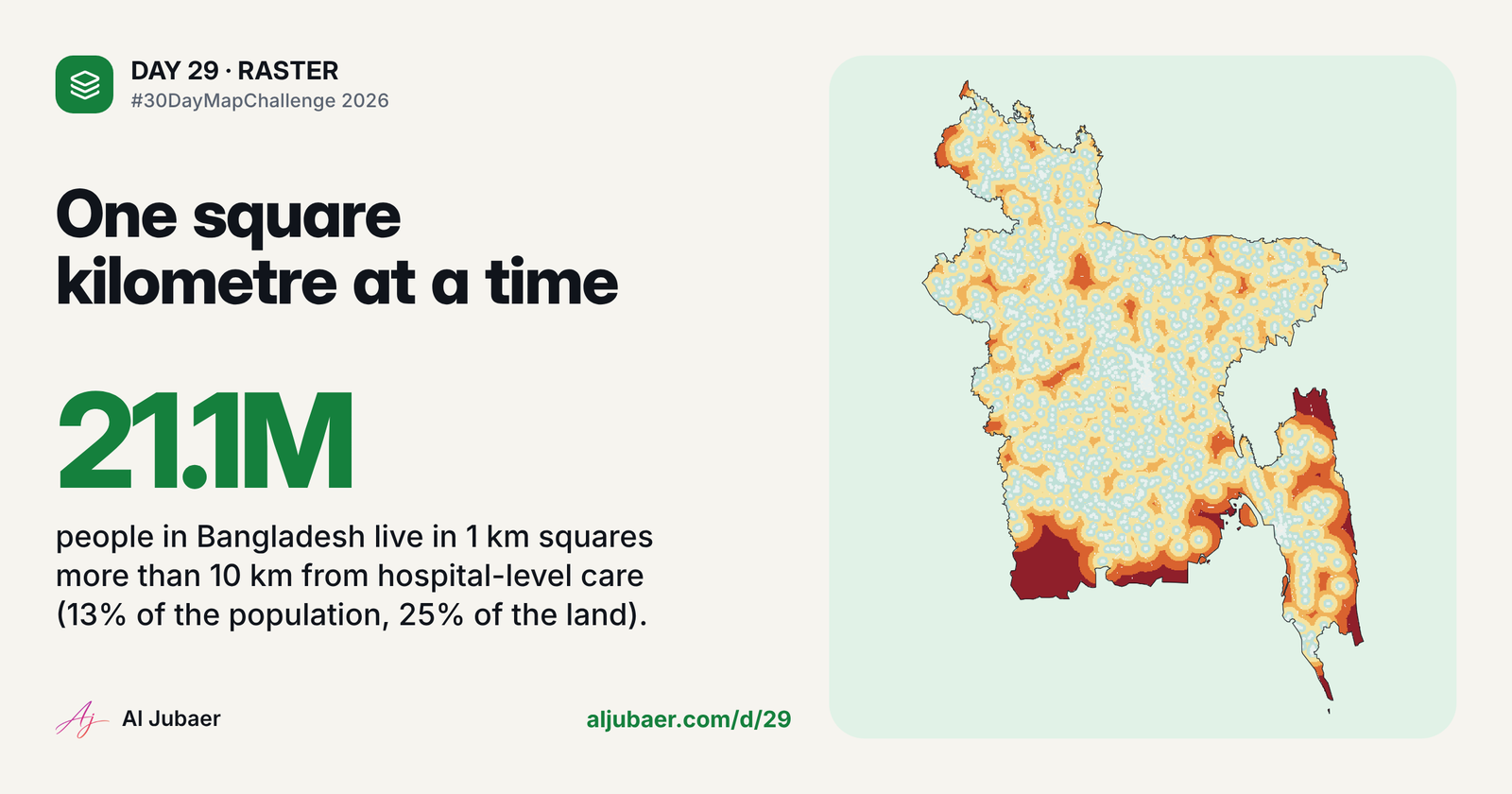
Day 29 · Raster — One square kilometre at a time
 Web map & dashboard
Day 27 · New tool — Where would the next hospital reach the most people?
 Web map & dashboard
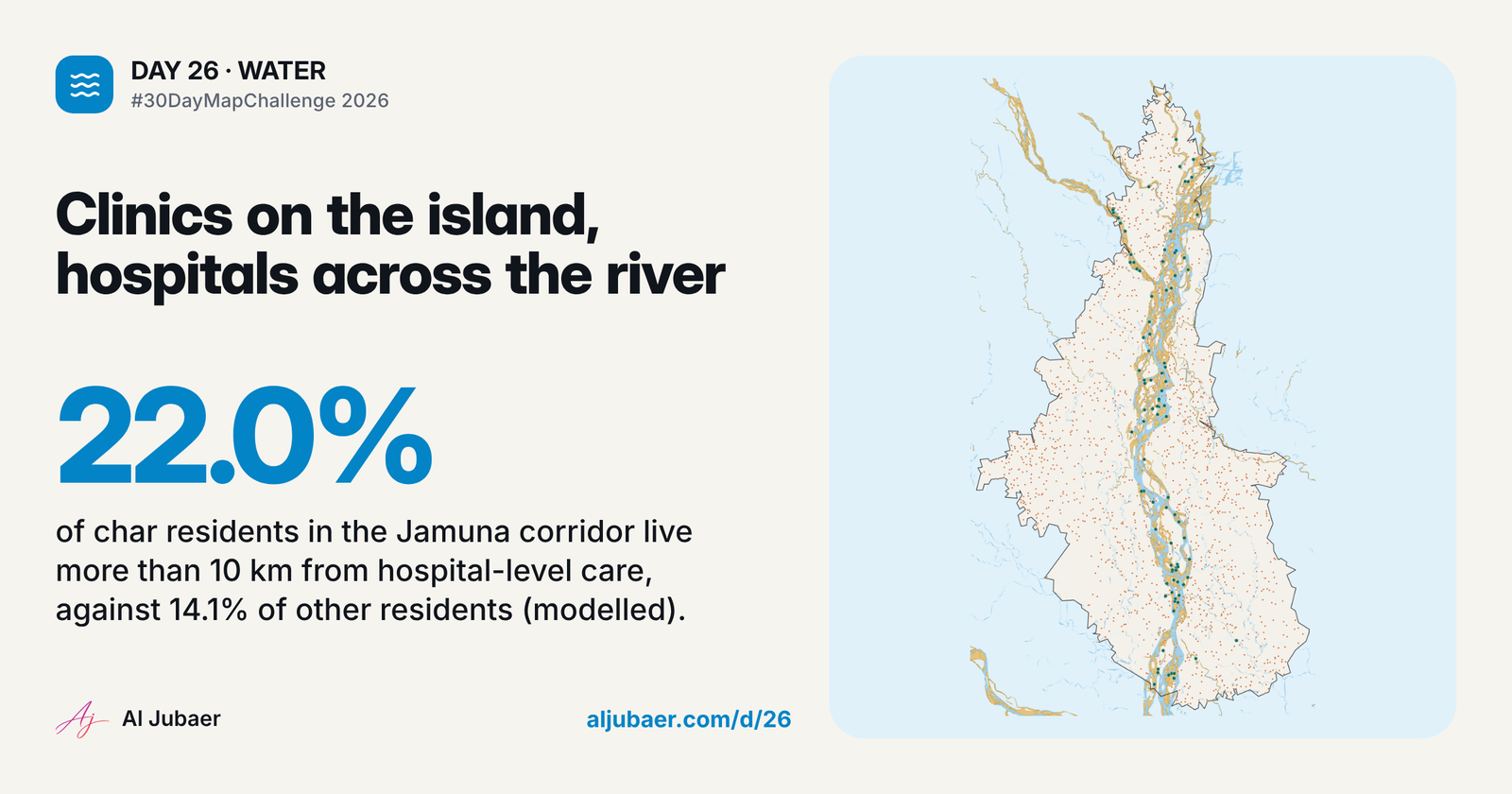
Day 26 · Water — Clinics on the island, hospitals across the river